
The Epidaurus Festival after the 2026 season
The Epidaurus Festival's 2026 programme belongs to a completed season at this guide's November 2026 reference point. Dates here describe announced productions and a specific later change. They are historical programme information. For a visit to the ancient site, begin with the daytime admission guide; an evening performance uses its own event ticket and arrival arrangements.
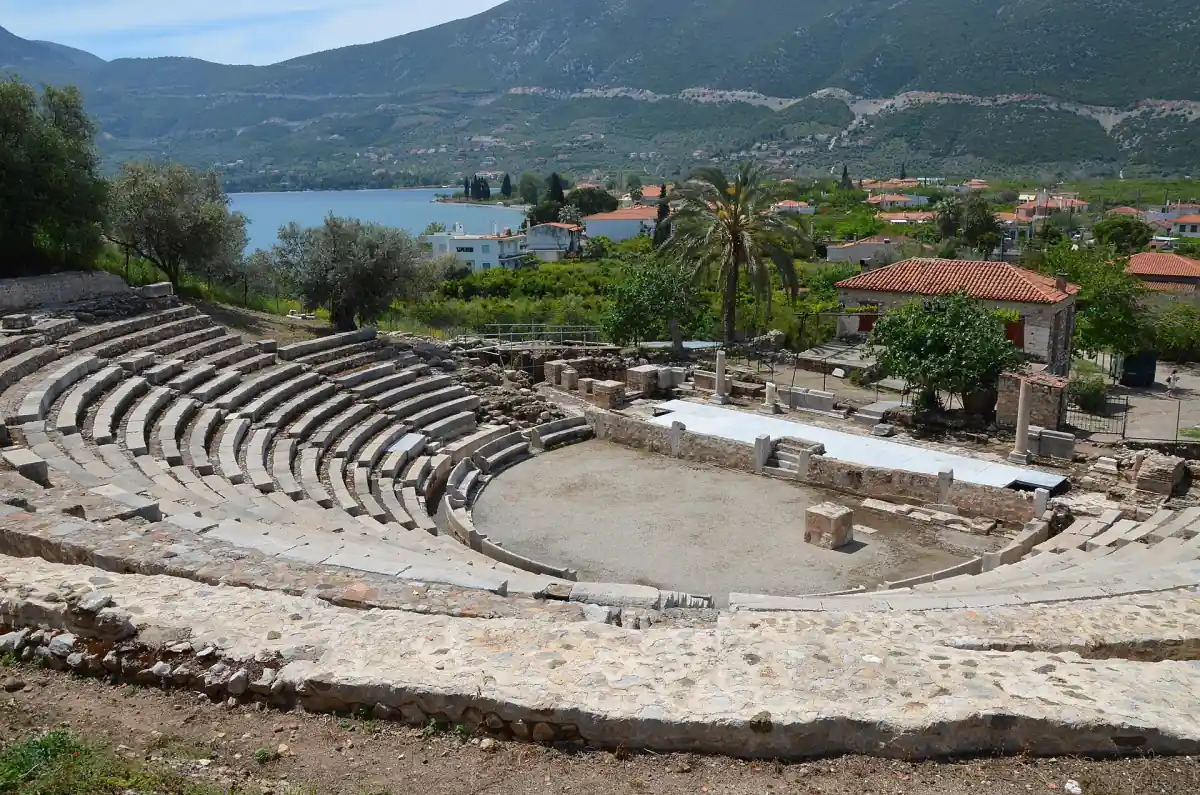
Three settings need to be distinguished: the great theatre at the sanctuary near Lygourio, the stadium and the small theatre at coastal Palaia Epidavros. The venue printed on an event ticket determines the destination. A photograph of the small coastal theatre should not lead you to plan an arrival there for a production at the large inland theatre.
The great theatre's modern performance history includes Elektra in 1938 and the establishment of regular festival performances in 1955. Its ancient setting remains central to the experience, while event admission, seating and conduct follow the festival's conditions. Our theatre guide explains the monument's architecture separately from attendance at a production.
Athens & Epidaurus Festival: the announced programme
The 2026 programme was presented on 29 April 2026. Its April programme book announced Cherubini's Medea at the great theatre for 20 June and Euripides' Ion for 28 and 29 August 2026. These are the dates as announced in that publication, rather than a record that every performance took place exactly as originally scheduled.
A concrete change affected The Trojan Women: the performance of 31 July 2026 was cancelled for safety reasons during fires, and an additional performance was scheduled for 2 August 2026. The festival announced that change on 1 August. It is a dated event in the past season and should be read with those dates attached.
Festival visits
No checked performance or festival transfer is available here.
Hand-picked tours, booked through . Prices are indicative starting prices in euros (as of October 2026). Tap a tour for live availability and the current price in your currency.
Daytime archaeological visits, planned separately
These daytime sightseeing options concern the ancient site. Arrange a separate visit for archaeology alongside any performance plans.
Seats, arrival and admission
The festival's ticket information dated 1 September 2026 describes event-specific, allocated seating, including numbered places in the upper ranks. It recommends arrival 60 minutes before the start and states that entry after the performance begins is not permitted. Build the journey around that early arrival rather than treating the advertised start time as the time to reach the entrance.
Children under six are excluded from festival performances under those conditions. Reduced categories include children aged six to seventeen, students, unemployed visitors and people with disabilities, subject to availability and supporting documents. The appropriate event ticket is the starting point for family planning; the daytime archaeological admission categories are a separate matter.
Performance prices vary by production and seat. Online and telephone purchases carry a service charge, while purchases at festival ticket offices avoid that surcharge. Consider the total purchase cost and the selected seating together. Keep the ticket available during the arrival process and distinguish it from any archaeological day ticket held for another part of the trip.
Rules at performances
The festival conditions dated 11 February 2026 prohibit photography, filming and sound recording, as well as smoking, eating and drinking within the venues. Mobile phones must be switched off. Footwear that damages the historic theatres, particularly heels, is prohibited. Choose shoes that respect the historic stone surfaces and allow for the approach to your seat.
These are performance conditions. For an independent archaeological visit, follow the site's daytime instructions and the areas opened to visitors. If combining both experiences, keep their admission arrangements clear: looking around the monument by day and taking an allocated seat for a production are different parts of the itinerary.
Transport and the stadium's specific 2026 bus
The documented special bus concerned Alceste at the stadium on 26 and 27 June 2026. That production's transport notice described a departure from 150 Iera Odos near Eleonas in Athens, followed by a return after the event. This was a production-specific arrangement. Use the arrival guide for general road and public-transport planning and arrange the evening return around the actual event being attended.
The small theatre and coastal town require their own location planning. The April 2026 programme announced TOURNÉE there for 26 and 27 June and I-ONE for 7 and 8 August. These past programme entries explain its festival role; daytime access to the small theatre should be arranged on its own terms.
Festival visit questions
Are the 2026 dates upcoming performances?
They are past announced dates at the November 2026 reference point. Use a new season's published programme when planning a future performance visit.
Does a sanctuary ticket include an evening show?
Event admission is separate and tied to a performance and seat. A daytime archaeological ticket covers the archaeological visit under its own conditions.
How early should I arrive?
The September 2026 festival information recommends 60 minutes before the start and excludes late entry. Allow for the approach to the venue and finding the allocated seat.
Can I use a general festival bus timetable?
Arrange transport for the specific production and venue. The June 2026 Alceste bus was attached to that stadium production, so it serves as a historical example of an event-specific service.