
Exploring Epidaurus history on site
Epidaurus history is easiest to understand by reading the sanctuary as a connected place. The theatre is part of a religious landscape devoted to Asklepios, alongside a temple, the Abaton, the circular Tholos and a stadium. The sanctuary belonged to the city of Epidaurus, whose coastal remains include a different, smaller theatre. Distinguishing those places helps keep the history and the journey clear.
A local licensed private visit includes the sanctuary, great theatre and admission tickets, starting at the main entrance ticket counter. It suits a visit focused on the archaeological ensemble. Combination excursions from Athens give the sanctuary a place in a broader cultural day, sharing the itinerary with other stops. The time spent travelling is part of that choice.
Start by deciding whether you want an explanation of the buildings in front of you or a wider route through ancient sites. Both are useful ways into the subject, but they shape the day differently. For the local layout and the indoor collection, read the sanctuary and museum guide.
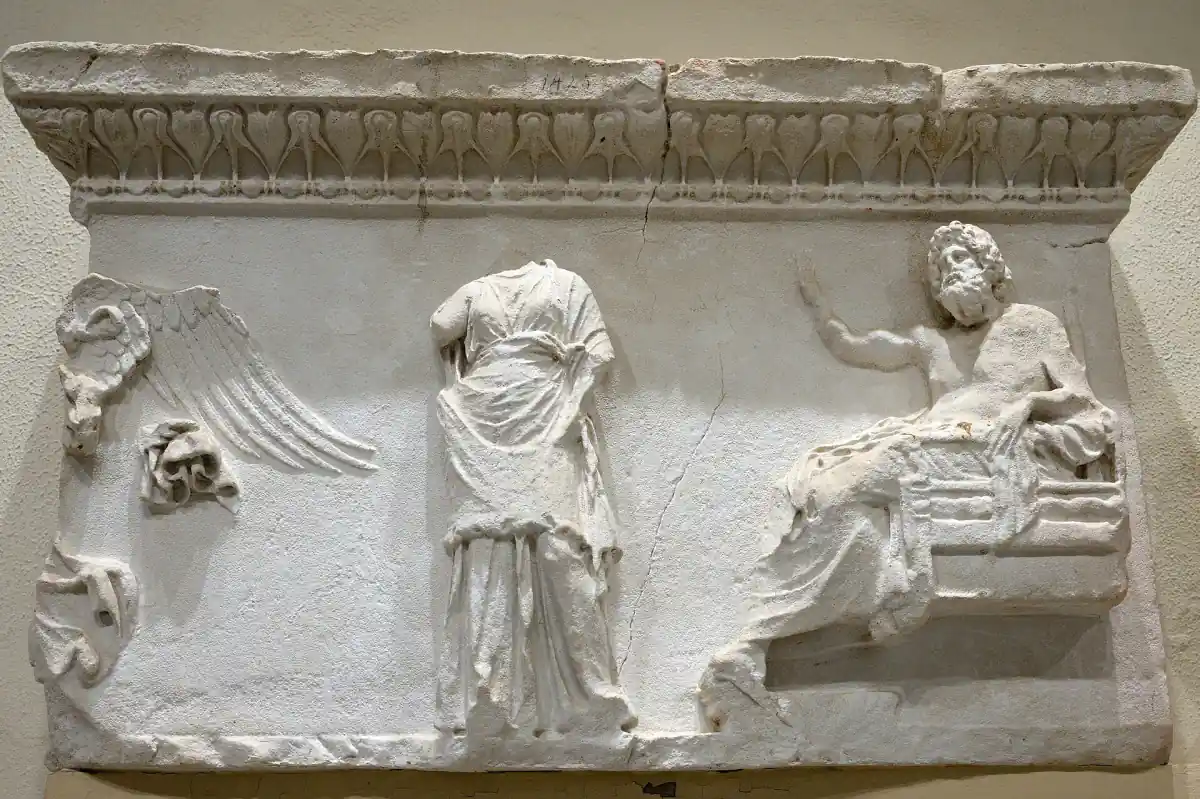
Guided archaeological visits
Meet a licensed guide at Epidaurus for a private visit, or choose an outing with transport and a guide. Check the selected option for included admission.
Hand-picked tours, booked through GetYourGuide and Viator. Prices are indicative starting prices in euros (as of October 2026). Tap a tour for live availability and the current price in your currency.
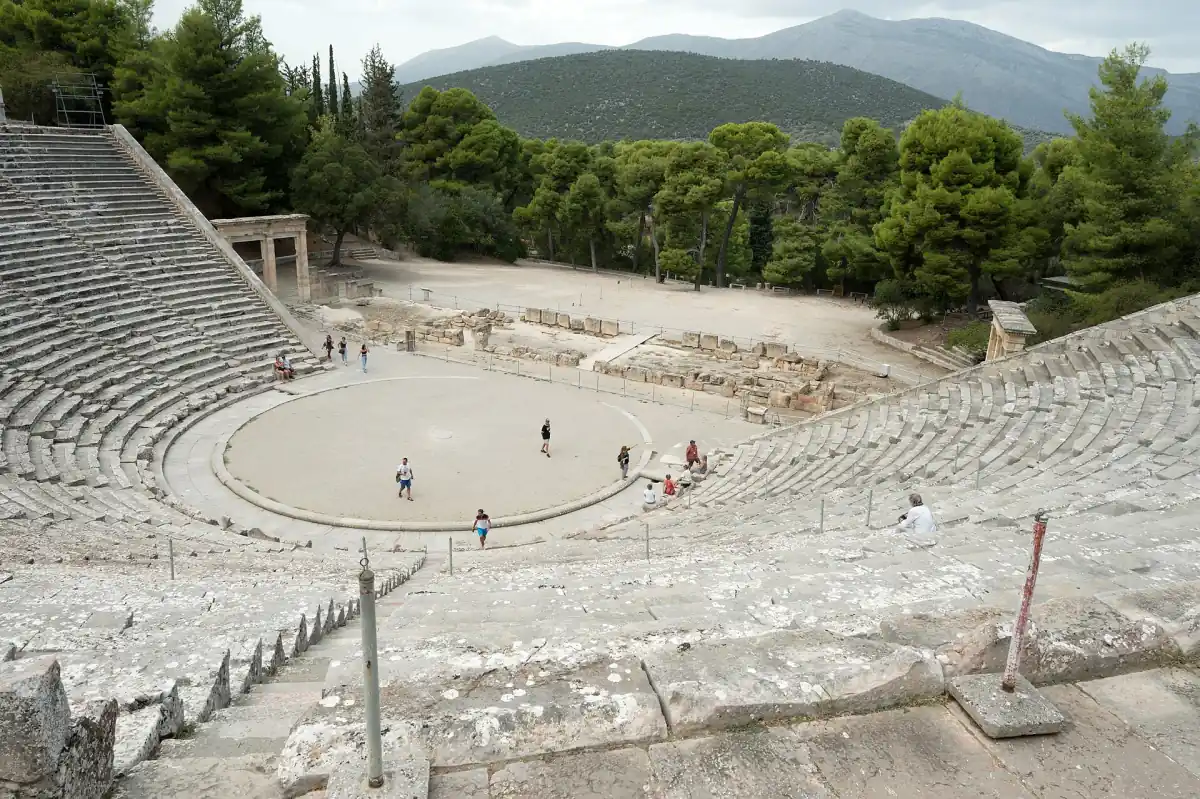
Private guided visit to sanctuary and theatre
- Licensed expert guide
- Admission tickets
- Visit to the Ancient Sanctuary of Asclepius
Meet your guide at the site for a visit that includes the Great Theatre.
Check availability →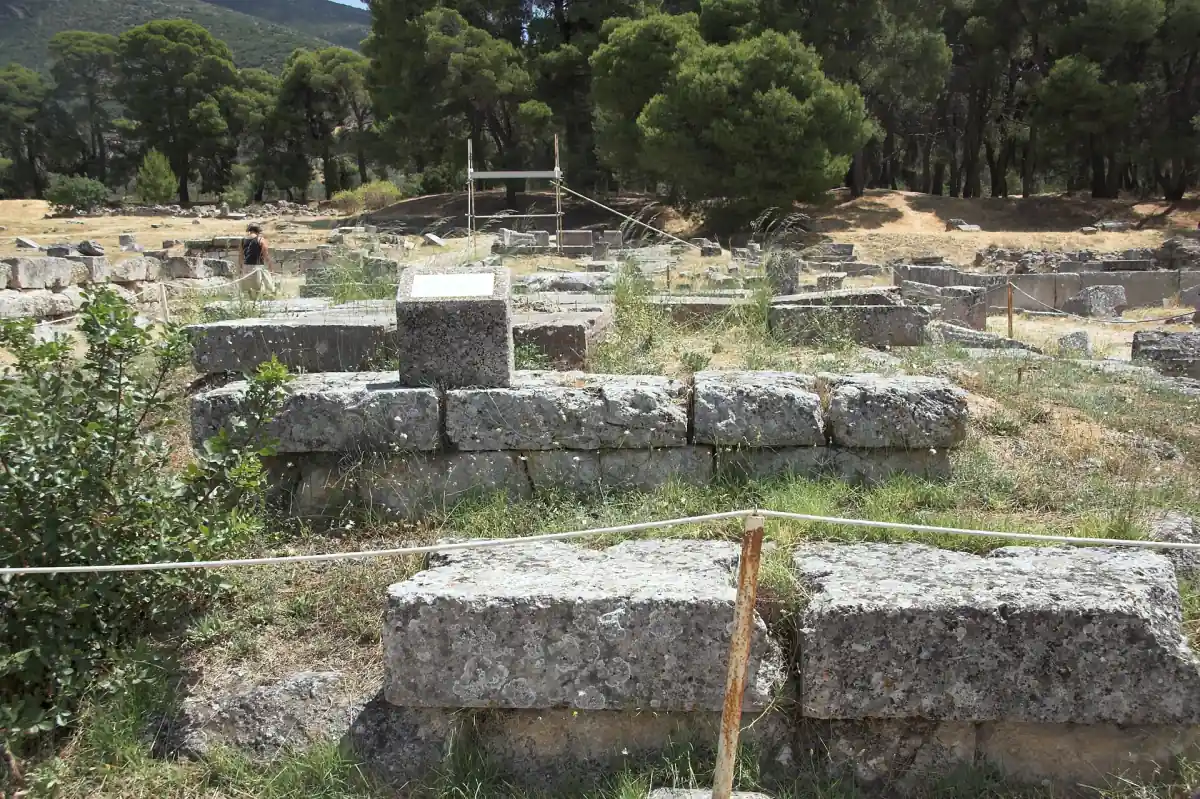
Epidaurus trip with a guide at the destination
- Professional guide at destination
- English speaking driver
- Air-conditioned minivan
Hotel pickup and drop-off are included. Admission is not listed among the inclusions.
Check availability →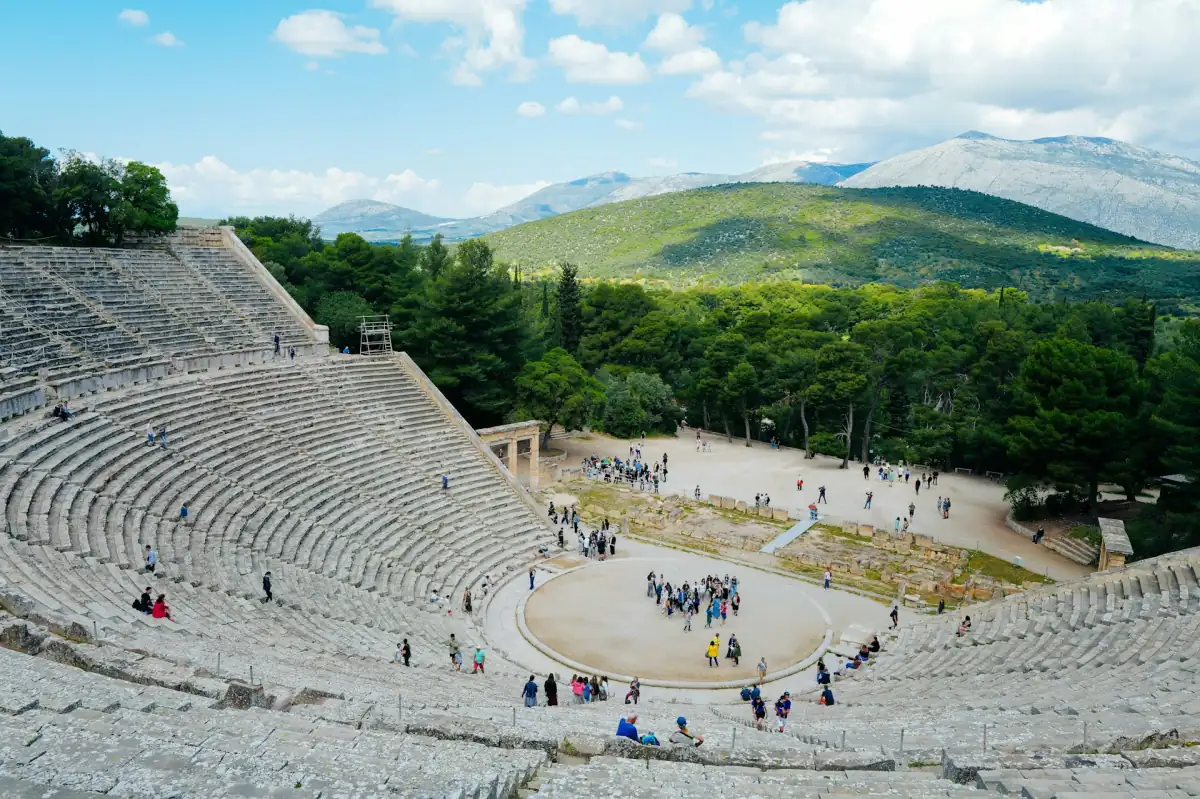
Archaeological day trip with Nafplio walk
- Air-conditioned bus with onboard Wi-Fi
- Professional tour guide
- Walking tour at the town of Nauplio
The guided site and museum visit operates on Monday, Thursday and Saturday. Admissions and lunch are included only with the corresponding option.
Check availability →Guided approaches to the ancient sites
Choose a local licensed sanctuary visit or a cultural excursion from Athens that places Epidaurus within a wider archaeological itinerary.
Archaeology: cult, building and rediscovery
The cult of Asklepios developed by the sixth century BC from the older cult of Apollo Maleatas. The temple, Tholos and theatre are principal monuments of the fourth century BC. This chronology matters when looking at the ruins: the religious tradition predates the monumental buildings that now define many visitors' image of the site.
The great theatre was built in the late fourth century BC, approximately 340 to 300 BC. Its attribution to Polykleitos the Younger comes from the ancient writer Pausanias. The architecture and acoustics guide explains how the seating, orchestra and stage building work as parts of one composition. The building's visual clarity should not obscure its place within a larger sanctuary.
The sanctuary experienced renewed prosperity under the senator Antoninus in the second century AD. The local antiquities authority places final abandonment after the earthquakes of AD 522 and 551. These later phases remind visitors that the remains represent a long history of use, rebuilding and decline, rather than a single frozen moment in classical Greece.
Excavations from 1881 to 1928 under Panagiotis Kavvadias and the Archaeological Society of Athens underpin the museum collection. Inscriptions, architectural elements and objects from archaic through Roman periods provide different kinds of evidence. A building fragment explains construction; a written text can preserve a dedication or an account of religious practice. Give both a place in your reading of the site.
Asklepios and mythology
Local myth describes Asklepios as the son of Apollo and Koronis. That is a religious tradition, rather than a historical biography. The distinction adds depth to the visit: archaeology can show where worship took place, while myth explains how ancient worshippers understood the god and his relationship to the sanctuary.
Purification, water and ritual sleep were elements of the cult. In the Abaton, the sleeping visitor hoped to receive the god's advice about treatment. The museum's healing narratives belong to this religious world. Read them as historical accounts of belief and sanctuary practice, without turning them into modern medical promises or numerical claims about recovery.
Guided visits: local focus or a cultural day
The local private visit lasts one and a half hours and brings a licensed expert together with admission to the sanctuary and great theatre. Transport and meals are extra. Starting on site suits visitors who have already arranged their journey and want the guide's time concentrated on the monuments. Other private formats are explained on the private tours page.
The ten-hour bus excursion from Athens includes a professional guide, return air-conditioned transport and an audio app. Its inside archaeological site and museum guidance is offered on Monday, Thursday and Saturday. Site admission and lunch depend on the selected option. The ten-hour small-group minivan excursion includes hotel transfers, an English-speaking driver and a professional guide at the destination. Keep these service descriptions distinct when comparing cultural day trips.
The coast adds another ancient setting
The small theatre at the coastal city developed in stages from the middle of the fourth century BC into the Hellenistic period. Seat inscriptions name donors and connect it with the cult of Dionysos; Roman alterations changed its orchestra and stage. Read about Old Epidaurus before adding it to the route, because its location and access planning differ from those of the sanctuary.
Questions about ancient Epidaurus
Was the sanctuary already important before the theatre?
The cult developed by the sixth century BC, while the great theatre belongs to the late fourth century BC. Religious use therefore preceded the theatre's construction.
Do healing inscriptions prove modern treatments?
They preserve ancient accounts associated with the cult. Read them as historical and religious sources, alongside the instruments and architectural evidence in the museum.
Which guided format concentrates on the sanctuary?
The one-and-a-half-hour local licensed private visit starts at the main entrance and includes the sanctuary, great theatre and tickets. Combination excursions put the visit into a longer day with transport and other destinations.